When a bump appears on the eyelid, it is often a chalazion or a stye—two distinct conditions that require different treatments. At Experience Care, the optometrist will assess the bump, guide you on how to soothe it at home (warm compresses, eyelid hygiene), and discuss clinical options (OptiLight IPL, cortisone injection, incision) if the lesion persists.
.png)

.png)
.png)
A chalazion often arises from a blocked gland in the eyelid. It develops slowly and can form a firm nodule, which may be mildly painful, lasting several weeks.
A stye, also known as a hordeolum, appears more suddenly. It is generally more sensitive to touch and occurs close to the lash line or in a gland of the eyelid.
Initially, the two lesions may look similar: redness, swelling, pain, or local tenderness. The optometrist examines the location, pain level, and progression to avoid actions that irritate the area, such as squeezing or puncturing.
Important: never squeeze a lump on the eyelid yourself, even if it seems ready to burst. This action irritates the tissues and increases the risk of infection or difficult healing.
THE CARE EXPERIENCE
The optometrist examines pain, redness, the precise location on the eyelid, and duration to distinguish chalazion, stye, or other irritation.
When episodes recur, the optometrist checks the eyelids, eyelid glands, blepharitis, ocular rosacea, Demodex, and habits that may cause irritation.
Based on what the examination reveals — duration, pain, firmness of the nodule, condition of the eyelash edge — the optometrist may recommend a home routine, in-clinic treatment, or a referral to an ophthalmologist.
Common Symptoms
The signs vary depending on the cause and progression. The eyelid may be tight, red, tender, or form a firmer nodule.
01
A small, visible or palpable lump, sometimes firm, in the eyelid or near the eyelashes.
02
A stye is often more painful at first. A chalazion may become less tender over time.
03
The eyelid may appear swollen, red, or heavier, especially in the first few days.
The swollen area can make the eyelid feel tight or pressed.
More pronounced swelling can cause blurred vision at times.
The eye can become more sensitive when the eyelid is inflamed.
These signs may suggest associated blepharitis.
If the bump returns, the optometrist looks for what is still irritating or blocking the eyelid.
"
A nodule on the eyelid may seem trivial, but its duration, pain, and location change the management.
Dr. Francesca Olinga, optometrist
Possible forms
There are three main forms that initially appear similar but are treated differently: chalazion, external stye, and internal stye.
Helpful Guidelines
Position, pain, duration: what helps identify each form
A tender spot near the lashes often indicates an external stye. A deeper, slow-growing, less painful nodule suggests a chalazion. A more pronounced diffuse pain, without a visible white spot, indicates an internal stye.
01
Chalazion
A slowly developing bump (days to weeks), often firm and minimally painful, located within the thickness of the eyelid. Related to a blocked and inflamed gland.
Signs
•
Slower to form bump
•
Often less painful after the first few days
•
Sometimes firm nodule in the eyelid
02
External stye
Rapid infection (within a few hours to 1-2 days), often painful, located at the base of an eyelash. May form a visible white spot.
Signs
•
Pain near the lash line
•
Localized redness
•
Possible sensitive or yellowish spot
03
Internal stye
Deeper infection of a gland in the eyelid. Often painful, sometimes more diffuse, without a visible white spot — may resemble an infected chalazion.
Signs
•
Swelling sometimes more diffuse
•
Pain inside the eyelid
•
Heavier or sensitive eyelid
04
Recurrence
Episodes that recur at the same site or move to another eyelid. Often associated with blepharitis, eyelid gland dysfunction, or rosacea that maintains local inflammation.
Signs
•
Recurring episodes
•
Crusts or deposits at the lash line
•
May recur with blepharitis, ocular rosacea, Demodex, or blocked glands
Why the eyelid swells
01
A gland in the eyelid becomes irritated or blocked, triggering localized swelling within a few hours (stye) to a few days (chalazion).
02
The nodule may grow larger, become firmer or redder — sometimes more painful for a stye. This phase can last several days to several weeks.
03
The lesion may gradually decrease, drain spontaneously, persist, or recur. If the chalazion does not resolve, in-clinic treatment can accelerate its resolution.
Origine possible
The Meibomian glands in the eyelids produce the oily component of tears. When the opening of a gland becomes blocked, its contents remain trapped in the eyelid, causing local inflammation.
The chalazion primarily involves this inflammatory response. The stye more often involves acute inflammation, sometimes linked to a localized infection near a lash or within a gland of the eyelid.
When episodes recur, the optometrist checks for factors that may sustain irritation: blepharitis, rosacea, blocked Meibomian glands, Demodex, or incomplete cleaning of the eyelid margin.
Perspective
2-8
A stye typically resolves within 5 to 10 days with warm compresses. A chalazion can last anywhere from 2 to 8 weeks; after that, the optometrist may discuss options to help speed up healing in the clinic.
The stye progresses more quickly: redness and pain often diminish within 5 to 10 days with regular warm compresses.
The chalazion follows a multi-step process: formation of the lump, maturation (the nodule becomes firmer), sometimes spontaneous drainage, and then gradual resolution. This entire process can last from 2 to 8 weeks, sometimes longer.
If the lump persists, becomes harder, changes appearance, or recurs, the optometrist may discuss options with you that could speed up resolution.
Most eyelid lumps are not urgent. However, severe pain, expanding redness, or changes in vision warrant prompt evaluation.
Especially if the eyelid becomes very sensitive or difficult to open. A prompt evaluation is recommended.
Urgent
Redness that extends beyond the eyelid warrants a prompt evaluation.
Urgent
These signs may indicate an infection extending beyond the local lesion. Prompt evaluation is warranted.
Immediat
Persistent blurred vision, significant discomfort, or pressure on the eye warrant prompt evaluation.
Immediat
When the eye is partially closed or difficult to open, prompt evaluation is warranted.
Urgent
Treatments vary depending on duration, pain, eyelid appearance, and signs around the eyelashes.
Sometimes, a home routine suffices. If the lump persists or recurs, the appearance of the eyelid, duration, and presence of blepharitis or ocular rosacea direct towards an injection, incision and curettage, clinical eyelid treatment, or a referral.
Discuss options for my chalazion
An optometrist and founder of the CARE Clinic, Dr. Francesca Olinga understands dry eye because she has experienced it. Experienced in the management of complex cases (neuropathic pain, demodex, chalazions), she uses innovation and attentive listening to guide you toward improved eye comfort.
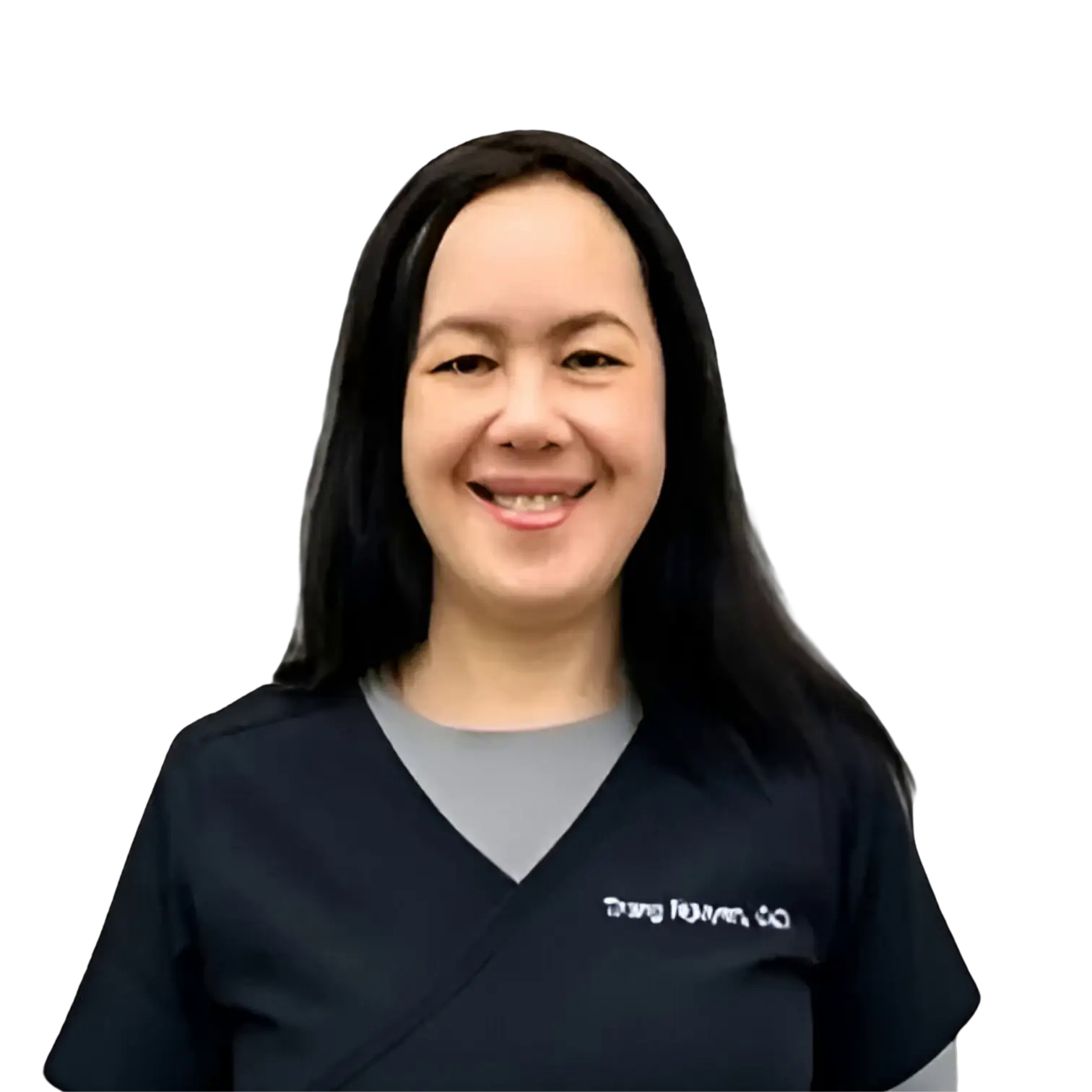
Optometrist with over 30 years of experience and speaker for eye care professionals. Dr. Nguyen has experience in improving visual quality affected by dry eye. She supports her patients in reconciling their aesthetic goals (makeup, cosmetics) and optimal eye comfort.

An optometrist and member of theOOQ, Dr. Daniel Nguyen splits his practice between eye exams in an optometry clinic and advanced management of dry eye conditions at the CARE Clinic. This dual practice provides him with a comprehensive view of his patients' visual health, from routine screenings to cutting-edge therapeutic protocols. dry eye Biography of Karine Charbonneau